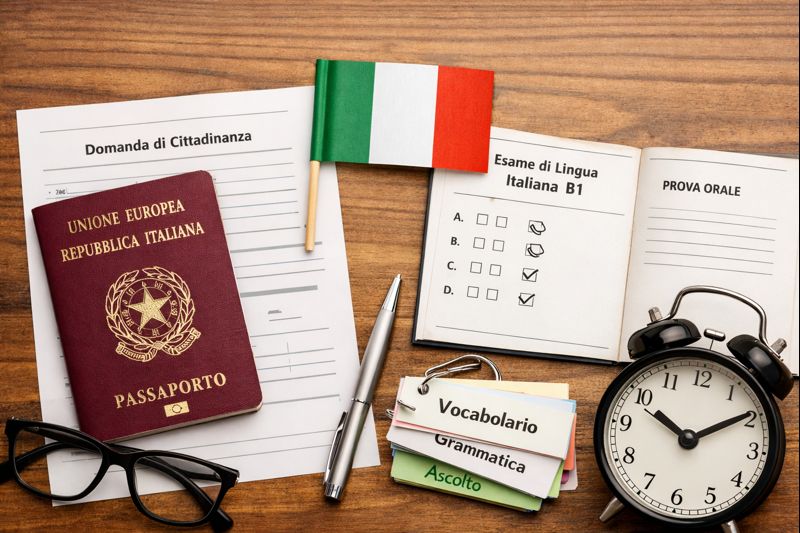
Italian Citizenship and the B1 Language Requirement
When people start the process of applying for Italian citizenship, most of the work can be handed over to someone else. A lawyer takes care of the application, a translator of the documents, and many people use an agency to deal with the comune and the certificates. The language requirement is different, because you have to take the exam yourself, and it is often the part people think about last.
Since the 2018 Security Decree (Law 132/2018), a B1 level of Italian has been required for citizenship by residence and by marriage. Citizenship by descent follows different rules. Who is entitled to apply, and under which conditions, is explained on the citizenship page of the Italian Ministry of Foreign Affairs. This article deals only with the language exam.
Most of the questions I get from candidates are about the practical side: which certificate to choose, what happens on the day of the exam, and how long it takes to get ready. I prepare candidates for this exam regularly, often with tight deadlines, so this is what I usually explain in the first lesson.
What B1 means in this context
B1 is officially an intermediate level. For the citizenship exam it means you can follow everyday spoken Italian, deal with ordinary situations, read and write short texts with a clear structure, and make yourself understood even when you make mistakes.
The exam doesn’t look for style or advanced grammar. It checks whether you can use Italian in daily life, and candidates who prepare as if it were an academic test tend to spend time on the wrong things.
The accepted certificates
There are four certifications recognised for citizenship:
- CILS, from the Università per Stranieri di Siena
- CELI, from the Università per Stranieri di Perugia
- PLIDA, from the Società Dante Alighieri
- Cert.it, from Università Roma Tre
The certificate has to be issued by a body recognised by the MIUR or the MAECI. Some private language schools issue their own B1 certificates, and these are not accepted for citizenship, even when the level is correct. It is worth checking the accreditation of the centre before registering.
I have a slight preference for CILS and CELI, mostly because I like the way the tasks are designed, but the differences in level between the four are small. What changes is where they are offered, how often sessions run, how long results take, and one detail that matters more than most people realise.
CILS B1 Cittadinanza or a standard B1
The CILS offers two B1 exams. One is the standard B1, the other is a version created specifically for citizenship applicants, called B1 Cittadinanza. Both are accepted for citizenship, but they work differently.
The B1 Cittadinanza is shorter, a little over two hours including the oral part, and slightly simpler, with fewer tasks and no separate grammar section. The catch is that there is no second chance on individual parts. If you fail even one of the four sections, you have to sit the whole exam again and pay the full fee again. The certificate is valid only for citizenship, which is exactly what it is designed for.
The standard B1 is longer and a bit more demanding, close to four hours. In exchange, the sections you pass remain valid for eighteen months, so if you fail one part you only repeat that part. The PLIDA B1 works the same way.
For most candidates the Cittadinanza version is the natural choice: they are entitled to citizenship, and getting the passport is the reason they are taking the exam. What decides the matter is risk. Someone whose level is even across all four skills usually does well with it. Someone with a clear weak point, often listening or writing, may be safer with an exam that lets them keep the parts they pass. The standard B1 is also the better option if you might need the certificate for work or study in Italy, where the Cittadinanza version is not accepted. This is one of the first things I discuss with a new candidate.
How the B1 Cittadinanza works
Many candidates see the exam format for the first time on the day itself, and that costs them points. The CILS B1 Cittadinanza has four parts, each assessed on its own.
- Listening, about thirty minutes: two tasks with recordings at normal speed, such as a phone message, an announcement or a short conversation. This is usually the part that surprises people.
- Reading, about forty minutes: two tasks based on short real texts, like a notice or an email.
- Writing, about forty minutes: one short text, typically a message to someone or a short description of a situation. What counts is that it is clear and organised.
- Speaking, about ten minutes: a short personal presentation, followed by a task such as describing a situation or handling a simple exchange with the examiner.
You have to pass every part, and with the Cittadinanza version there is no way to keep the parts you passed. I stress this with every candidate, because someone who speaks confidently but struggles with listening will fail the whole exam, so the preparation needs to cover all four skills evenly.
Dates and registration
The exams are held in Italy and abroad, at universities, Italian cultural institutes and accredited schools. Sessions usually take place only a few times a year, and registration closes well before the exam. Results for the B1 Cittadinanza arrive about six to eight weeks after the exam date.
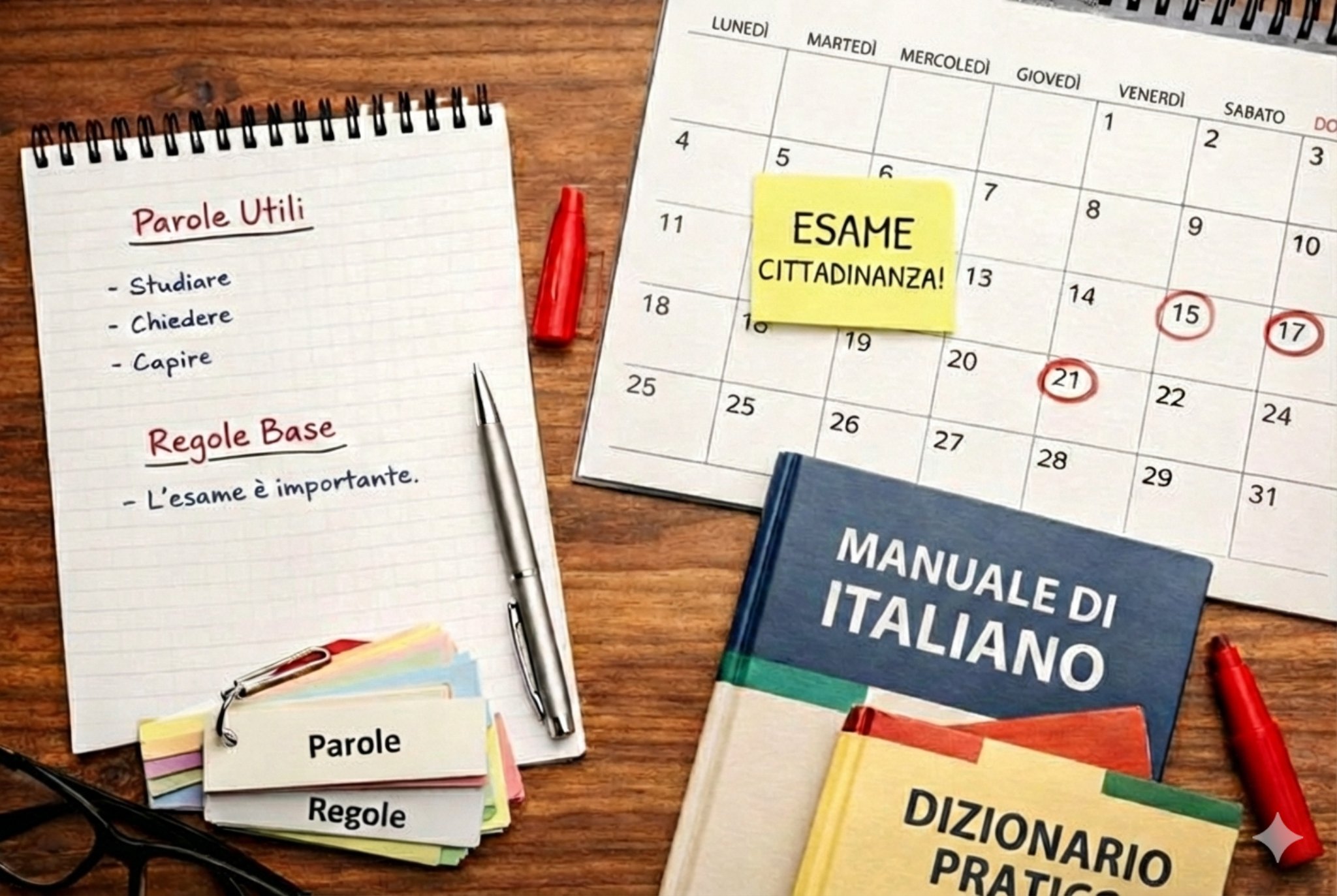
For this reason my first conversation with a new candidate is about dates rather than grammar. I’ve seen well-prepared people lose several months because they missed a registration deadline. We look at the session they are aiming for, add the weeks it takes for the results, and plan the preparation backwards from the deadline for the application.
How long it takes
It depends mainly on where you start. Going from A2 to B1 usually takes a few months of regular work, and I’ve had many candidates do it successfully. Starting from scratch takes longer and needs more structure, especially for writing and listening, which improve more slowly without guidance.
If you don’t pass, you can sit the exam again at a later session, which usually means waiting a few months for the next session and several weeks more for the results. With the B1 Cittadinanza you repeat everything. It is safer to aim for a session with some margin before your deadline rather than the very last one.
How I prepare candidates
The candidates I work with usually have busy schedules and a real deadline. I use the official exam materials as the basis for the lessons, looking at the kind of tasks and language that come up in the exam, and I build each course around the starting level, the exam chosen and the time available. This is how our personalised Italian courses work for citizenship candidates.
A recent case was a Brazilian applicant living in Germany. He was under pressure with the timing, but his knowledge of Portuguese helped, and with focused preparation on official materials he passed the CILS B1 Cittadinanza at his first attempt after a few months.
Planning your preparation
The sequence is the same for everyone. First make sure you are entitled to apply and know which deadline you are working towards. Then choose the exam and the session. Only then does it make sense to plan the preparation, counting backwards from the registration date. The first two steps are about rules and calendars. The third depends on your Italian, and it is the one candidates most often underestimate.
For many candidates the exam ends up being the first time they study Italian with a clear goal, and that helps a lot.
Preparation for the B1 works best as a course rather than a handful of separate lessons: a regular weekly rhythm, the official exam materials, and extra time on the skill that is holding you back. Our courses for citizenship candidates are organised this way, online, one-to-one and planned around the session you are aiming for.
If you would like to talk through your level, the right exam and a realistic timeline before deciding, you can book a free trial lesson first.